For future reference
Learning to Use Google Analytics More Effectively at CodePen
For future reference
Learning to Use Google Analytics More Effectively at CodePen
Last Saturday I attended Barcamp Bodensee in Konstanz.
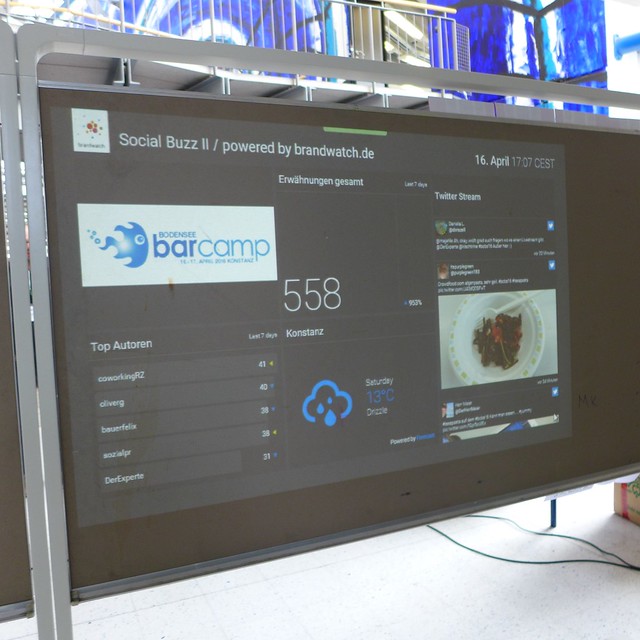
Here are some brief notes and thoughts on sessions that I attended:
Ask a digital teen
Barcamp attendees asked a 15 year old what apps and web services he uses. Youtube, Gaming, TeamSpeak, Discord app, some Whatsapp, Google Calendar. No TV. No Facebook. His school doesn’t allow the use of smartphones on the school grounds.
Digital strategy for non-profit organizations
Digital strategy means finding a way to connect CMS and CRM and accounting and payment apps and processes. CiviCRM was recommended; if offers connectors for WordPress and Drupal. There’s an association called “Software für Engagierte” (in German only). QuickBook, Collmex were mentioned for accounting purposes.
Getting Things Done
A certified GTD trainer offered an intro to David Allen’s method. Mind like water. Some very useful tips. For example, to do lists aren’t enough. Lists need to be sorted and categorized. Actionable items and next steps instead of just listing the project. Tasks that take less than 2 minutes should be taken care of immediately. Cos it takes more time to get back to these mini-tasks. Related links:
Intro to Snapchat
Useful intro to a social network that is growing fast. The speaker encouraged us to sign up to learn how influencers are using Snapchat for storytelling.
Sehr coole Session zu #snapchat von @sozialpr beim #bcbs16 pic.twitter.com/EdCYOuELyg
”” André Kirberg (@adkirberg) April 16, 2016
Messaging
Messaging apps are probably going to change in 2016, c.f. Facebook’s recent announcement. E.g. possibility to order services and buy products via chat like in Asian chat apps, Line and WeChat. We went off on a tangent and collected a comprehensive list of messaging apps….
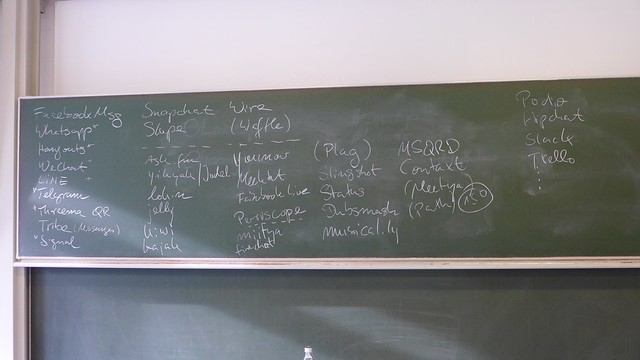
I’ve learnt a lot at barcamps in the past and recommend attending one or two if you can. The same content will cost you $$$ at a commercial conference and lots more nerves. Barcamps are fun and way more relaxing.
Some photos from my Flickr stream:

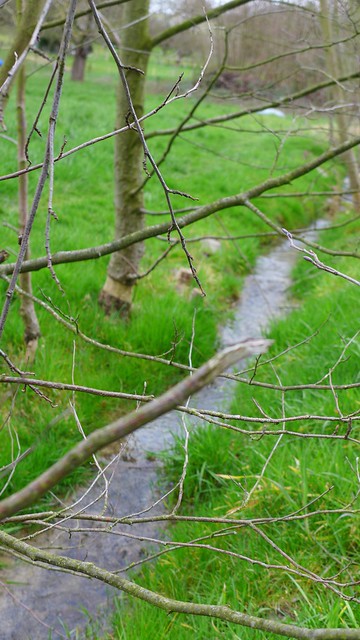
I’ve got this theory that fresh green colour soothes the eyes and helps to relax.

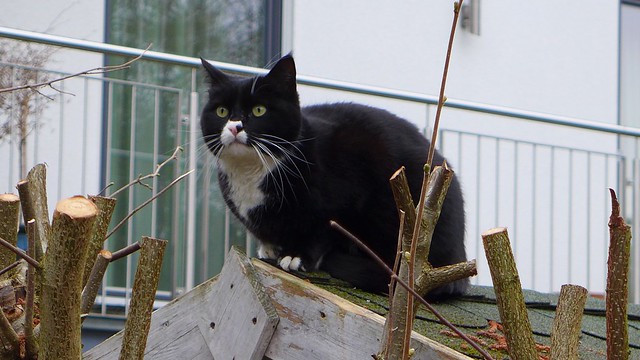
I saw 2 cats. Both look somewhat unamused. And ready to pounce on any intruders.

Saturday was sunny and warm. I like this snapshot, taken with my Moto 3 G:
On my daily bicycle commute, I kept noticing art posters, labelled Le nouvel Unterlinden. Today, I saw a Designboom article, shared by someone in my community, discussing the newly renovated museum in Colmar.
herzog & de meuron renovates and extends colmar's musée unterlinden https://t.co/qXcTozsuOY pic.twitter.com/sepN4lgU19
— designboom (@designboom) February 7, 2016
Connection made.
Advertising works. Both print and online.
I listened to the latest episode of The Big Web Show this weekend. The topic was interaction architecture. Here’s a tweet pointing to the show:
Is Information Architecture a dead art, or does it matter more than ever?@abby_the_ia @zeldman
Big Web Show â„– 142https://t.co/ft9EQIw8n4— The Big Web Show (@thebigwebshow) January 22, 2016
On Sunday evening, I saw this tweet, which describes exactly what happened to our content/our attention.
Remember when we all moved out of the houses we owned into the big free hotel, and years later management changed the wallpaper to ads?
— Paul Ford (@ftrain) February 6, 2016
Maybe a good candidate for my Twitter Poetry collection?
I saw this film: An by Naomi Kawase. I liked it.
It’s about freedom. It has a poetic feel. It’s slow and feels real. You get attached to the main characters.
Here is an attempt to find my best snapshot per month for 2015.
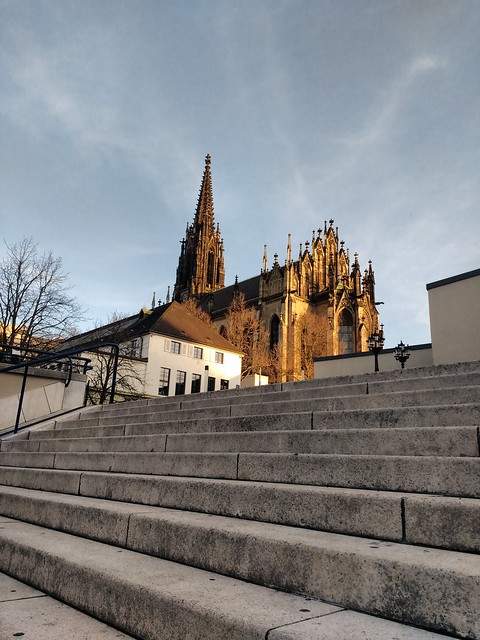
January 2015

February 2015
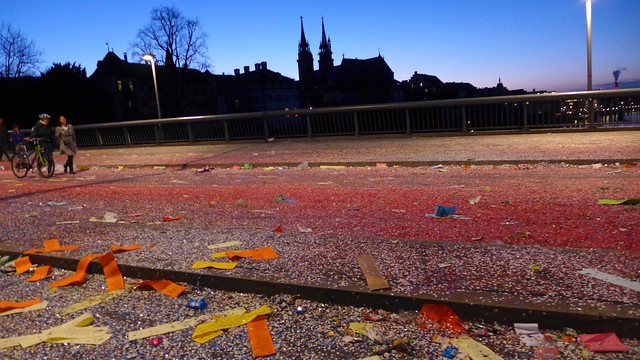
March 2015
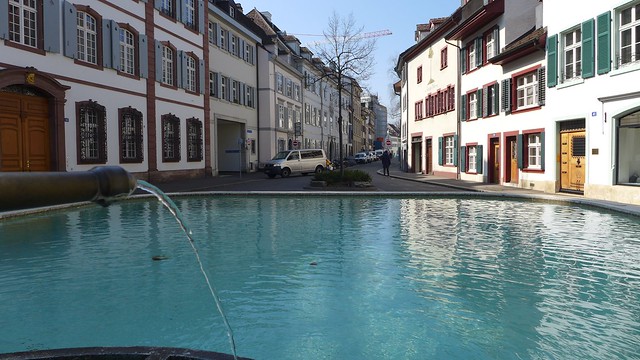
April 2015

May 2015
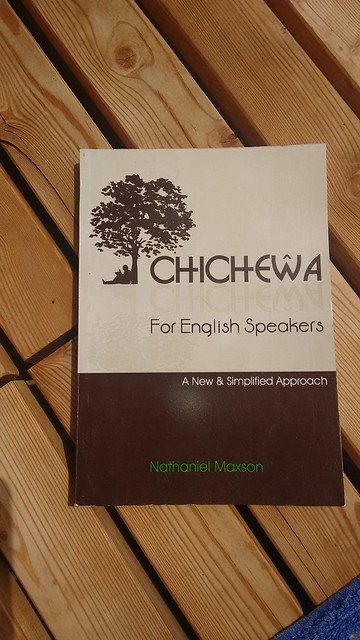
June 2015

July 2015
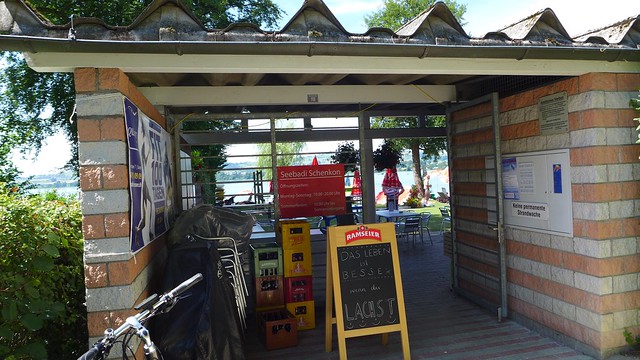
August 2015

September 2015

October 2015

November 2015
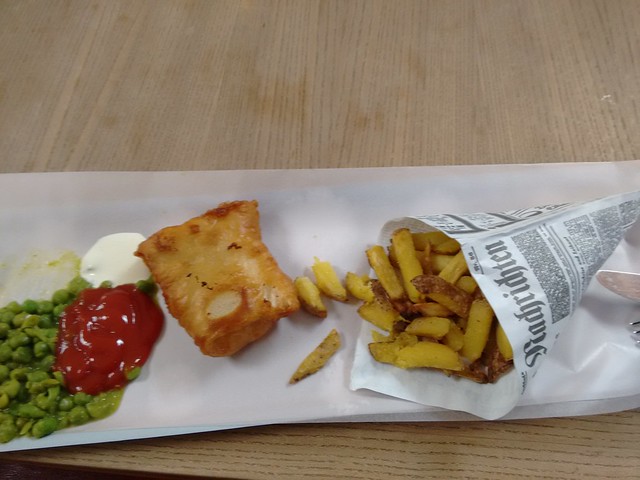
December 2015

The method:
I quickly scanned through my photos on a per month basis and selected a photo based on number of views or memories or both.
History:
See past summaries for 2014 and 2013 and 2012 and 2010.

Auto-sharing via Jetpack Publicize didn’t work on my previous post on chiperoni.ch. I’ll need to investigate if there is a conflict with another plugin.
Irgendetwas ist immer.
Maybe this post will be auto-shared?
I’ve started using Vine on my 2nd generation Moto G. I haven’t bought a tripod or started editing vines. Some recent shots:
Everyday typography:
Everyday typography https://t.co/sCth2BNAeV
— âœ___CollectThisTweet (@nchenga) October 22, 2015
Chiperoni ku Basel (drizzle rain in Basel):
Chiperoni ku Basel https://t.co/2oBqHHOMzn
— âœ___CollectThisTweet (@nchenga) October 15, 2015
Velo culture:
Velo culture https://t.co/E0PWXp1o4M
— âœ___CollectThisTweet (@nchenga) October 17, 2015
Whoooosh:
Whoooosh https://t.co/XzdhTgwFtP
— âœ___CollectThisTweet (@nchenga) October 19, 2015

Snapshot of a flowered rose.
Via the #confluencecon hashtag, I found some good background articles (thank you @ruthburr, @danlovejoy for tweeting).
You are NOT the user. http://t.co/bMlp1uwJqU #ConfluenceCon #UX #Marketing
— Dan Lovejoy (@danlovejoy) September 10, 2015
Take the time to understand your user. It will decrease the risk of creating an an unfavorable experience and give you an opportunity to turn them into your greatest advocate.
Guerrilla Research Tactics and Tools http://t.co/IGIsa3bC92
— âœ___CollectThisTweet (@nchenga) September 10, 2015
A reminder of research tools that I can use to learn more about the people that will use a website or app is provided in this article.
Guerrilla Research Tactics and Tools http://t.co/IGIsa3bC92
— âœ___CollectThisTweet (@nchenga) September 10, 2015
Above all else, there is no excuse for designing based off assumptions””in the immortal words of Jakob Nielsen: “Leaving the user out is not an option.”
Some new marketing tools mentioned in this slide deck by @ipullrank and a call to understand marketing technology:
Some new tools mentioned in the slides above:
Why No One Pays Attention to Your Marketing – Whiteboard Friday
"if you don't test, you'll never know" http://t.co/9uk0hhiSaT
— âœ___CollectThisTweet (@nchenga) August 16, 2015
One of my favourite jokes is to walk into the office and complain about helmet hair. I keep saying that I’ll write a confessional book how bicycle helmets ruined my hairdo and life.
I found some stats that show helmet hair is an issue for some bicycle commuters:
I enjoy my bicycle commute too much to worry about my hair.

The reasons to wear a bicycle helmet outweigh the disadvantages by far:
Complimentary link:
I found a link on the history of bicycle helmets. And wearing a helmet is quite a recent development.
How helmets have changed over the past 30 years of the #TDF: http://t.co/6xVuQFCEqz pic.twitter.com/bxf5jvRiU8
— Bicycling Magazine (@BicyclingMag) July 26, 2015

I read this Forbes article on email subscription growth:
5 Email Growth Hacks From Someone Who Amassed A List of 750,000
"I’m a do-er. I do and learn." http://t.co/xWVDiIc6Pp
— âœ___CollectThisTweet (@nchenga) July 26, 2015
Two sites that I read regularly – Moz and Hubspot – analyzed and wrote about their own blog post frequency.
Quality vs. Quantity: A 6-Month Analysis of the Age-Old Blogging Debate
Raising the Bar: A Publishing Volume Experiment on the Moz Blog
I am stunned. Flabbergasted.
How will small and medium-sized enterprises thrive in such a content marketing world?
High quality and high frequency.
My prediction has always been that we will return to media empires with gatekeepers guarding the entrances.
Citizen journalists and bloggers will only get a voice when the gatekeepers choose to let them.
A couple of months ago, I went thru an SEO audit. I wanted to write a blog post to reflect on what I learned. This is my feeble attempt to collect my thoughts and jot down some notes. Where available, I’ve tried to list my source links.
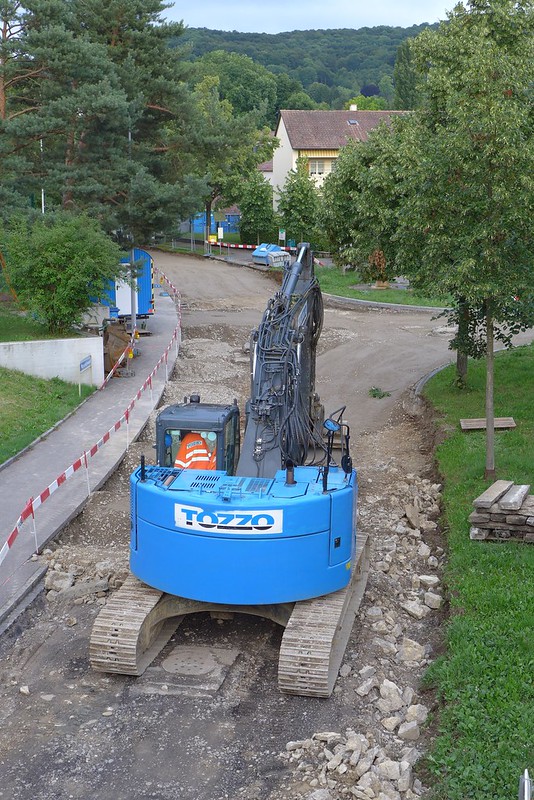
What is an SEO audit? In an audit, your website is analyzed and checked (often by an external SEO specialist) to be sure that it complies with SEO best practises.

12 items to consider:
GWT is the place to find these. Same for missing title tags. Or meta descriptions that are too short. Or the index status, which shows you how many pages are indexed.
rel="alternate" hreflang=x on all web pages.
What will an SEO audit look like in 10 years? That is an intriguing question. I have no idea which way SEO will go. My guess is as good as yours. I do know that SEO is getting quite complex. And may even be replaced by *something* entirely new. If you are a website manager, my advice is to dig in and ask lots of questions.
Look at all aspects. Take a holistic approach. Try to form a cross-functional team (designer, ux researcher, web developer, SEO expert, content writer).
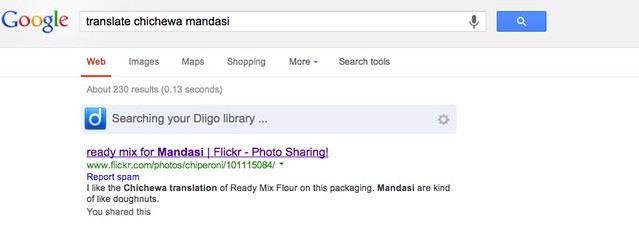
If you do search on Google, remember the search engine result on page 1 is not necessarily the best content, but the best optimized content. Use Google search operators to get you off the beaten track. And there are alternatives like DuckDuckGo and Wolfram Alpha, which we should support more to avoid monopoly and manipulation.
Related links
GWT resources:
http://www.lunametrics.com/blog/2014/05/21/how-to-use-google-webmaster-tools-for-seo/
On-page factors:
https://moz.com/learn/seo/on-page-factors
Duplicate content:
http://www.hobo-web.co.uk/duplicate-content-problems/
https://support.google.com/webmasters/answer/66359?hl=en
How to carry out a content audit:
https://moz.com/blog/content-audit-tutorial
Technical Site Audit Checklist: 2015 Edition:
https://moz.com/blog/technical-site-audit-for-2015
Disclaimer:
All mistakes are my own. Please let me know if I got something really wrong. I’m here to learn. These notes help me to reflect and learn.
Some notes and photos from Saturday’s UX camp in Zürich:
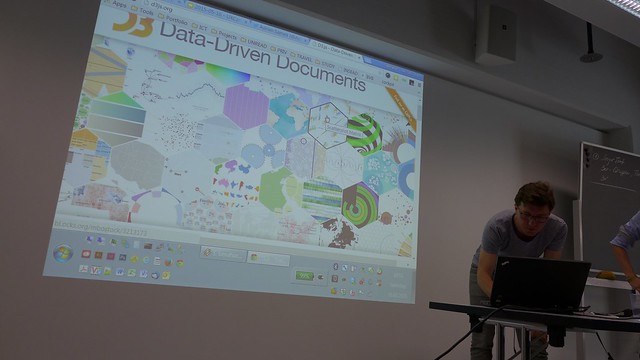
Adrian Sameli took us thru the process of building infographics. His tip on tools to use: Excel and Adobe Illustrator. He tried one or two infographic tools but didn’t like them much. In the discussion we looked at d3js.org.
Next, I attended a session on atomic design. Design systems not pages.
Developers need to agree early on with designers on the semantics of the smallest, small and medium building blocks. These then are used in templates to build pages.
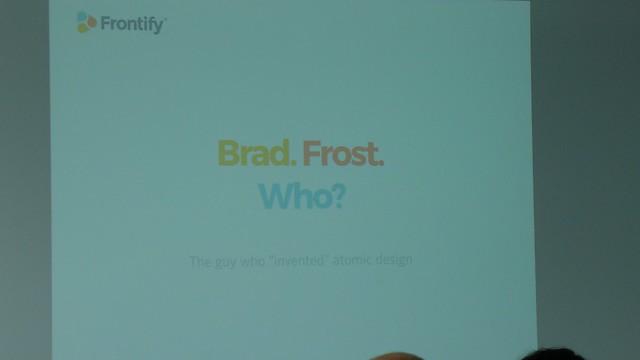
Background reading: Atomic design by Brad Frost.
Focus on identifying modules, semantics and adding markup first.
— âœ___CollectThisTweet (@nchenga) May 16, 2015
The discussion after the presentation got straight to the daily challenges. Questions like
Next, I listened to Simone Reichlin talk about the RITE method vs traditional user tests.
About the RITE method http://t.co/MzHAlYCRsI
— âœ___CollectThisTweet (@nchenga) May 16, 2015
Main idea: Often you see some obvious problems in your UX design after your first or second test person. Instead of going thru the whole test with the remaining test participants, change the prototype with your improvement between tests. And then continue testing your changed prototype.
Main requirement: Designer needs to watch the user test. This shortens discussion time afterwards.
Tools used: Sketch and inVision.
Don’t change too much. Follow Medlock’s classification.
Want to try RITE? Start with the traditional method first. Only use RITE after you have gained some experience in carrying out user tests.
Prio 1 obvious cause, quick solution, implement the fix and test with the next participant.
— âœ___CollectThisTweet (@nchenga) May 16, 2015
Next:
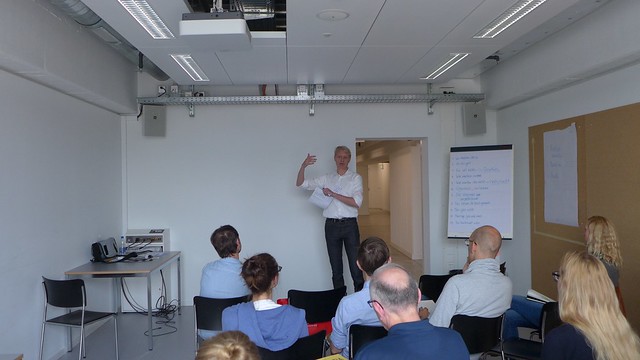
A very good session by Vincent van der Lubbe on creating space in conversations. And we even got a reference sheet to take home. The hard part is putting this into practise.
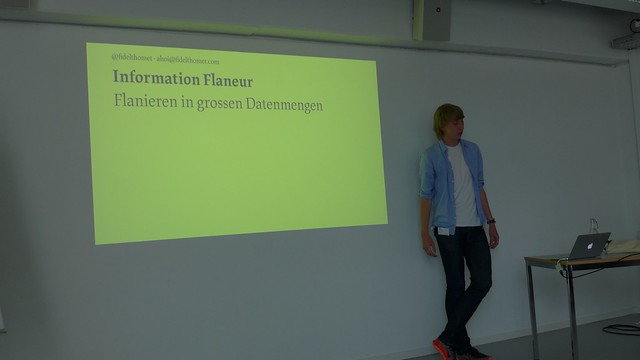
Fidel Thomet presented his B.A. project, Flaneur.io. It’s a Chrome extension to capture digital findings in form of text fragments gathered while browsing the web.
We briefly looked at Marian Dörk’s PivotPaths. This podcast by datastori.es was recommended.
Unknown, useless fact about me:
Once upon a time, I had to write a uni term paper on Walter Benjamin and Paris in the 19th Century.
My snapshots are on Flickr.
Disclaimer:
All mistakes are my own. Please let me know if I got something really wrong. I’m here to learn. These notes help me to reflect and learn.
For future reference:
Questions to consider before you delve into the details
"What does our organization create that helps solve searchers' questions or problems? " http://t.co/tPTJq5Z6FB
— âœ___CollectThisTweet (@nchenga) February 4, 2015
At the dentist on Friday:
A Herbert Grönemeyer song played on the radio and my dentist started whistling along while I was on the dentist’s chair.
Too funny.
I briefly started talking about WordPress alternative with @persillie the other evening.
Downsides of WordPress:
She mentioned Squarespace:
I like the user interaction of #squarespace – but you need to be a US, Canadian, Irish or british resident to use the shop.
— persillie (@persillie) December 15, 2014
I found two articles with further ideas to explore:
5 Modern WordPress Alternatives to Keep an Eye On
Goodbye WordPress: 2014 Will Be the Year of the Flat-File CMS
Statamic, Craft, Ghost, Kirby, Perch, Jekyll
I looked at Jekyll very briefly some months ago. But I didn’t dig in enough. It’s for techies. I don’t think it will solve the user interaction issues that non-techies have.
BTW, way back in 2009 somebody used WordPress to generate flat files.
I’m looking at HTML5 templates. I played around with some of the designs at HTML5UP last year. I found this site, based on the HTML5 Boilerplate, yesterday.
The outline of Michiru mountain in Blantyre.

The Wikipedia page for Michiru mountain needs some more info.
What is the altitude in meters? 1470m?
Apparently 80% of all Copenhageners cycle in winter. There’s a Tumblr site called Viking Biking which shows photos of people cycling in snow.
No snow in Basel. I don’t cycle in icy road conditions. But apart from that, I also cycle in winter.
It’s December 2014 and I’m still taking snapshots.
Last year I selected 1 photo for each month. I will try the same for 2014. Here we go.
January 2014

February 2014
March 2014
April 2014
May 2014
June 2014
July 2014
August 2014
September 2014
October 2014
November 2014
December 2014

Most productive month was November with over 200 uploads. Least productive was June 2014.