Basler Zeitung on Malawi Hunger Crisis

Due to poor rains Malawi is experiencing food shortages:

Hungerregion in Malawi zum Katastrophengebiet erklärt

Blantyre. AP/baz. Angesichts der bedrohlichen Hungersnot in Malawi hat die Regierung alle 28 Provinzen des ostafrikanischen Landes zum Katastrophengebiet erklärt und die internationale Gemeinschaft um Hilfe gebeten. Die Krise bedrohe fünf der elf Millionen Einwohner, sagte Präsident Bingu wa Mutharika am Samstag in einer Radio- und Fernsehansprache. Die Dürre habe zu einem Einbruch der Mais-Produktion geführt.

Die Opposition kritisierte, dass der Schritt der Regierung viel zu spät komme. Das Welternährungsprogramm (WFP) der Vereinten Nationen hofft aber, dass die Erklärung Mutharikas die Regierungen der reichen Länder zu neuen Hilfszusagen veranlasst. «Die Zeit läuft uns davon», sagte WFP-Sprecher Peter Smerdon. Die Vereinten Nationen haben die Staatengemeinschaft um eine Malawi-Hilfe von 73 Millionen Euro gebeten. Bislang sind aber nur 23 Millionen eingegangen.

source: Basler Zeitung Online

More Malawi news:
United Nations – OCHA IRIN Malawi News
The Malawi Nation
BBC NEWS | Africa | Malawi issues food crisis appeal

Mike McKay in Lilongwe describes in his blog a number of factors which may have led to this situation.
Weltwoche.ch article on Hernando de Soto

Absurd bureaucracy in many poor countries leads to the fact that only the rich and well-connected elite can get around the laws and regulations. Better than doubling development aid and cancelling debts would be to promote private property, set up a fair legal system and a free economy.

Die Entwicklungsländer, sagt er, könnten die Armut aus eigener Kraft bewältigen. Dazu bräuchten sie keine Verdoppelung der Hilfsgelder und auch keinen Schuldenerlass, wie das jüngst der G-8-Gipfel in Schottland beschloss und diese Woche der Uno-Gipfel in New York bekräftigt hat. Erfolgversprechender als alle Milliardengeschenke, sagt der Sohn eines sozialistischen Politikers, seien: Privateigentum, Rechtsstaatlichkeit und Marktwirtschaft. Diese Botschaft verbreitet de Soto mit dem Talent zum eingängigen Beispiel. Beschwörend schüttelt er beide Arme und sagt heiser: «Vergessen Sie doch Ihre eigene Geschichte nicht. Die Schweiz war noch im 19. Jahrhundert das Armenhaus Europas, ein Drittweltland mit nur wenigen natürlichen Rohstoffen. Auch sie wurde nicht dank Entwicklungshilfe wohlhabend, sondern weil sie sich eine funktionierende Marktwirtschaft und einen intakten Rechtsstaat schuf.»

source: Weltwoche.ch

Further link on Hernando de Soto:
Biography

Example how external aid supports unproductive policies:

James Shikwati, who heads the Inter Region Economic Network, a Kenyan NGO, says drought aid to his country in the 1990s “killed production” in many areas and increased dependency.

Aid can also encourage misguided policies. Mr Shikwati says this has been the case in Ethiopia, where farmers are not allowed to own land.

Instead of introducing reforms, he notes, the government appeals for aid.

When donors respond, Mr Shikwati says, “they are subsidising a government policy that makes it difficult for people to be productive”.

source: BBC NEWS | Africa | Can aid do more harm than good?

Personal Outsourcing

I enjoyed reading A.J. Jacobs’ article on outsourcing his life to India.

I particularly liked the emails his personal assistant wrote on his behalf to stop receiving press releases:

Dear All,
Jacobs often receives mails from Colorado news, too often. They are definitely interesting topics. However, these topics are not suitable for “Esquire.”

Further, we do understand that you have taken a lot of initiatives working on these articles and sending it to us. We understand. Unfortunately, these articles and mails are too time consuming to be read.

Currently, these mails are not serving right purpose for both of us. Thus, we request to stop sending these mails.

We do not mean to demean your research work by this.

We hope you understand too.

Thanking you,

Honey K B

I hadn’t heard about Your Man in India, but it sounds like a great service for expatters in general.

And I think Jacobs is right that there are quite a few good outsourcing companies out there with very motivated employees that are learning fast.

Source: kottke.org

cycle tour along the shores of Lake Malawi…

There’s a Malawi cycle tour being organized by a British charity organization next Sept 2006:

Cycle Malawi for Transaid

Registration costs £299 and you need to raise a minimum of £2,750 in sponsorship.

The itinerary is very scenic along the shores of Lake Malawi.

Sounds like a lot of fun and something I would love to do. I wonder how hard it is to raise the above sum of money…

interview with Clotaire Rapaille

It’s absolutely crucial for anybody in communication — and that could be journalists, TV, media, all of it, or marketing people — if you want to appeal to people, it’s absolutely crucial to understand what I call the reptilian hot button. If you don’t have a reptilian hot button, then you have to deal with the cortex; you have to work on price issues and stuff like that.

source: PBS

banana bread experiment

To get rid of some ripe and mushy bananas*, I decided to bake some banana bread today.

What I usually do is mix up a basic cake butter and then add 2-3 bananas to the batter. Today has been one big experiment ‘cos I didn’t have some of the ingredients. And I still don’t have a proper measurement jar. But that’s no reason to stop this bucket chemist.

I’m still waiting to see what the results are like….


[update]
Banana bread tastes great… not sweet, lots of natural banana aroma, beautiful and moist. Experiment was a huge success!

The Recipe:
400 g flour
150 g sugar
1 packet of vanilla sugar (or some drops of vanilla essence)
3 bananas
2 teaspoons baking powder
80 ml oil
120 ml milk

Mix everything together starting with the sugar and oil.

Bake the whole thing very slowly at 150 degrees…

I added water instead of milk, some cocoa powder, and lots more baking powder (i’m a bucket chemist, i believe in chemical reaction).

__

*i hate eating ripe and mushy bananas. I’d rather throw them away. I used to feed my dogs the ripe bananas. But that was in Malawi where bananas are plentiful and cheaper.

Managing Google’s Idea Factory

for future reference:

One of the key reasons for Google’s success is a belief that good ideas can, and should, come from anywhere. Page and Brin insist that all engineers in the company have one day a week to work on their own pet projects. An ideas mailing list is open to anyone at Google who wants to post a proposal. What Mayer does is help figure out how to make sure good ideas bubble to the surface and get the attention they need. The task is becoming more complex as Google grows, with a workforce of 4,200 now and revenues on track to hit $3.7 billion this year.

Business Week article on Marisa Mayer

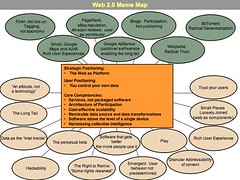
Web 2.0 again

Rick Segal’s advice: Avoid Web 2.0 categorization. And it’s not just an easy way to find funding. You still need the business to go with it.

if you are working on solving a problem and looking to make money from the solution, focus on the customer and take advantage of what your ancestors, those Web 1.0 old farts, have done for you.

Lots of Bandwidth = You can do it on the web as a service

Lots of Storage = You can give people rich content because they can get it quickly

Lots of users = “Everybody” can get to an Internet connection

Free is good = You can do a lot, code a lot, market a lot, without spending tons of money

By the way:
Web 2.0 2005 is sold out, and registration is closed.

Toys made from Tin and Wire

The toy museum in Riehen is showing African toys made from tin and wire:

Museen Basel

Riehen Info

According to a newspaper article, the above show focuses on toys from West Africa.

A couple of years ago, a friend and I were discussing an idea to import these very original, handmade toys. I have seen some great toys in Blantyre.

It also explains why some wire fences disappear so fast… kids finding new uses.

From Mac to PC and Back

Some useful tips to keep in mind if you’re moving Powerpoint slides from
Mac to PC and back:

  • Quicktime-compressed images won’t work on the PC
  • Quicktime movies seldom work on PCs. Use MPEG or AVI instead.
  • Links to external graphics files will break. Embed all graphics.
  • Links to most media files will break UNLESS you copy the media file to the folder where the PowerPoint file is, and only then insert it.
  • Check Format, Replace Fonts to see what fonts are used in your presentation. You can safely count on Arial, Times New Roman, Courier and Symbol being present on every PC. Tahoma and Verdana will probably be present on any PC with Office 97 or later, but may not be there if the PC has only the free PowerPoint Viewer. Mac versions of PowerPoint can’t embed fonts.
  • Use only RGB color for your PowerPoint graphics. PowerPoint will convert CMYK or Pantone colors to RGB anyway. It’s better to do it yourself so you can control the conversion. In case that’s not a convincing argument, try this: PowerPoint may substitute a red X for CMYK graphics. Ouch. Stick with RGB.
  • Ungroup, then regroup imported graphics to convert them to PowerPoint shapes. Do the same to inserted charts if you don’t need them to be editable on the other platform.
  • Don’t squeeze your text too tightly into placeholders. Font substitution and slight differences in text rendering on Mac vs PC can cause your text to get truncated or spill out of too-tight text boxes.

evaluating Drupal 4.6.3

I’ve finally downloaded and installed Drupal to get an idea if this would be a possible CMS for a small web project I’m planning to start.

Installing the basic modules and setting up the MySQL database was straightforward. No problems here.

What I’m finding more daunting is the CMS interface itself. There are a lot of modules and settings. And it takes some time to grasp the concept and terminology.

For example, it took me a while to figure out how to create a simple menu. I found this posting that suggested using the so-called Menu on-the-fly module. I guess, I would have expected this to be part of the basic install. Or maybe there’s another simple way that I’m missing.

I haven’t had a look at how to change the design of a theme or how to build my own theme.

Drupal offers a lot of options and additional modules. But at this point I’m worried that the CMS interface is too complex for the end users I’m planning for. And probably too much effort to customize for a small web project.