Category: marketing

  • Reasons to blog

    I saw this article today on the benefits of blogging:

    1. Blogs refine your thoughts
    2. Blogs reward the creator
    3. Blogs amplify your humanity
    4. Blogs connect us to our tribes
    5. Blogs give introverts a voice
    6. Blogs reward the “new age” publishers
    7. Blogs embrace the experimenters
    8. Blogs accelerate discovery
    9. Blogs open up a world without borders

    I’ve written about the reflective power of writing. E.g. here.

    I bet, there were similar articles about writing ever since writing was invented.

    It’s quite difficult to carve out a space in our multimedia world to sit down and write and reflect and create. Many times I just feel like I am part of the echo chamber. Not adding any value. Not going deep enough.

    One reason to keep your blog going is digital memories.

    The weather was beautiful today. Sunny and warm. I tried to capture the day and hold onto the moment with these snapshots.

    Walking down the stairs:

    Photo

    Crossing the river Rhein at the Kraftwerk:

    hello basel

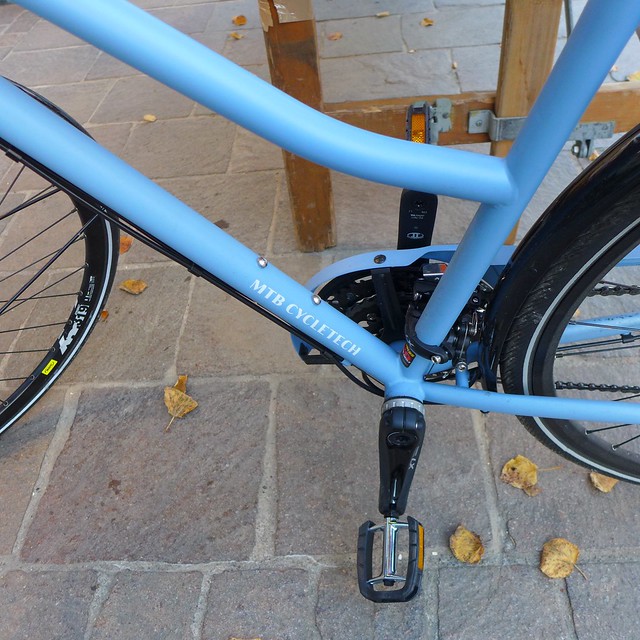
    This bicycle colour is cool:

    hell-blau

    Looking down:

    muster

    Just like in San Francisco, the fog moved in at around 5 pm:
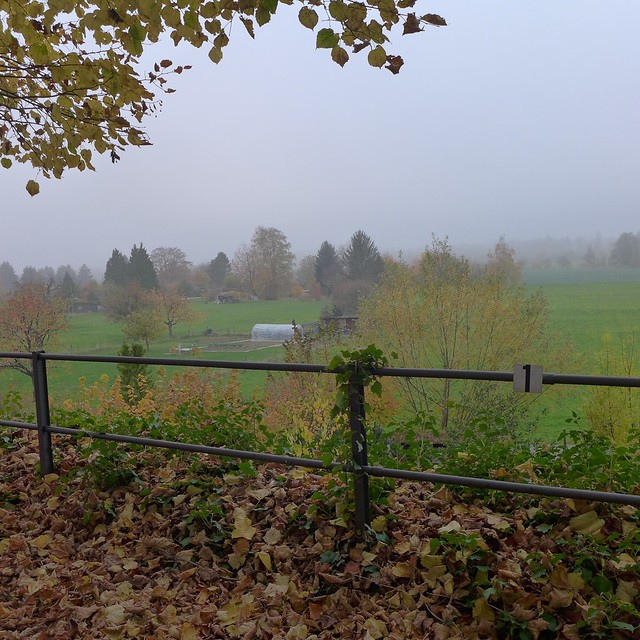
    der nebel kommt

    Autumn colours:

    leaves

    I am continuing my Vine experiment. Here’s the new water fountain in Riehen Dorf:

    Video isn’t easy. At all. This Coschedule blog post mentions some tools to explore:

    • Video Hance (iPhone)
    • QuickCast (iPhone)
    • ScreenFlow (desktop tool)

    Always a good resource, Hubspot lists video ideas to try out for your business.

    What tools or apps can you recommend? I’m on Android.

    By chance, I learnt that there is an edit function in Vine.

  • Referral traffic from social media has dropped

    I saw this Bufferapp article on declining social media traffic.

    We’ve lost nearly half our social referral traffic in the last year

    I say. No wonder. Everybody is online, creating tonnes of content. Most people are too busy to read, let alone follow so many data streams.

    Many web pages don’t get any traffic at all. A few sites get all the traffic.

    Interesting read. I recommend reading it.

    My tip: don’t share or comment on articles that you haven’t read. Even bots can do that. Be human.

    And. If you do like an article? Comment, share and write a blog post on it.

    If you’re on Facebook and want to see better content, I recommend following Robert Scoble’s advice. The filtering is improving. And this week’s announcement on Facebook Search means we may have a viable alternative to Google Search. At some point in the future.

    Lucky chiperoni.ch. It doesn’t need to grow traffic.

    Have a look at my photos on Flickr.

    walk this way

  • Content first

    Last Saturday I attended UX camp Switzerland. A very good event to learn about user experience, human-centered design, usability testing, MVP and prototyping tools.

    Talks I listened to:

    Stefanie Klekamp presented lots of background info on the Think Aloud usability testing method. Which I found useful. She explained the theories behind the method and also pointed to the research and shortcomings of the test. Shortcomings such as confirmation bias and evaluator effect. She briefly touched on Hawthorne effect, Rosenthal effect, primacy recency effect, hindsight bias. Practical tips for your next Think Aloud user test:

    1. Carry out a SWOT analysis of the website or app that you are testing beforehand.
    2. Take simple notes immediately.

    Overall conclusion: Think Aloud user tests are a good practical method to test websites and apps early and often.

    Next, I attended a talk by Tobias Günter called “Texter sind die besseren Designer” (in English: “Copywriters are the better designers”). His message was: We spend lots of time and resources on design and programming our web apps, but the content itself is often an afterthought. It’s reflected in the words we use: “Texte abfüllen”. Often there’s no content plan to begin with. Concept work is often based on “Lorem ipsum” dummy texts. If you consider the slogan “mobile first”, it should really be “content first”. Content is the reason people visit a website, or install an app in the first place. Often, content is not developed for mobile devices. Some copywriting guidelines to consider:

    • Keep it simple – only 1 thought per sentence
    • Add sub-headings
    • Add structure
    • Add some redundancy and repetitions
    • Add a focal point for images

    Some further tools mentioned to improve content development:

    1. Develop your content page as if there is no start page and no website hierarchy
    2. Develop your content as if there is no navigation, header, footer, sidebar
    3. Think of URLs as verbs
    4. Test your texts
    5. Develop your texts iteratively; continuously improve your content

    A good discussion followed. Every content page should be considered as being a landing page on its own. New developments include dynamic navigation entries depending on the content page I arrive at as a reader

    Some web agencies now carry out a content audit of existing and new content. I found a related presentation on Slideshare after the talk:


    Next, Samuel Frischknecht talked about minimum viable product (MVP) and presented some real-life client examples. He referred to a book called Lean UX by Jeff Gothelf. The lean process is

    1. Declare an assumption
    2. Create a MVP
    3. Run an experiment
    4. Collect feedback and carry out research

    The book looks interesting and maybe it will answer some of my open questions on Scrum and design.


    I attended more talks in the afternoon, but my ability to take notes decreased rapidly. I was tired.

    Conclusion:
    UXcamp was good. Many thanks to the organisers and sponsors. A good way to catch up on new developments and learn about a topic in one day.

    Disclaimer:
    All mistakes are my own. Please let me know if I got something really wrong. I’m here to learn. These notes help me to reflect and learn.

  • Quote of the day #SEO

    Social media isn’t reaching people like it used to.

    via The New Emphasis On Link Building: What's Behind It And How To React.

    Back to link building? Probably.

    Read this advice:

    The best way to have your website rank higher is to make it better for your users. Being better requires that your website is one or some of these types of things in comparison to your competitors”¦

    • more useful
    • more simple
    • more comprehensive
    • more funny
    • solve problems quicker or more effectively
    • more visually stunning