Snapshot of a flowered rose.
Snapshot of a flowered rose.
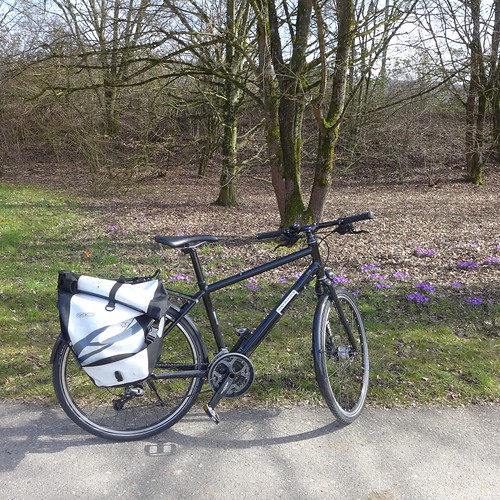
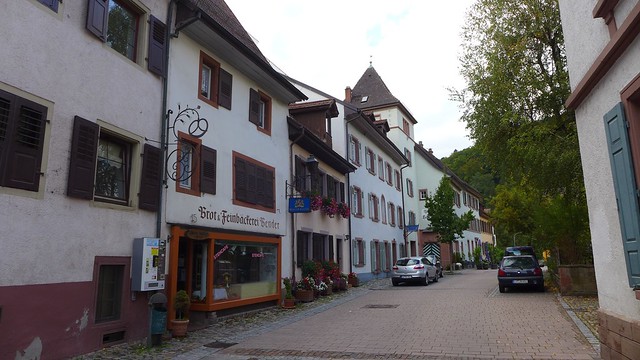
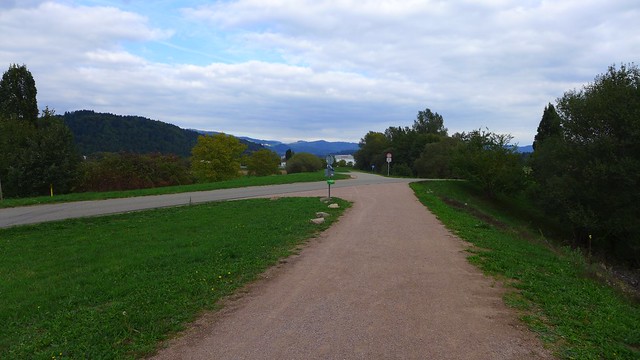
I cycled to Schopfheim. An easy tour about 20 km one way. Going I went via Brombach. Coming back I cycled on the other side of the Wiese river via Lörrach-Haagen.
Riehen – Brombach – Steinen – Maulburg – Schopfheim – Haagen – Riehen
There’s one stretch between Steinen and Höllstein where the bicycle route follows the busy main road, B317. Loud and lots of fuel fumes and particulates.
I missed one turn-off between Maulburg and Schopfheim and cycled the path up to Wiechs instead.
Category: easy
Length: about 40 km
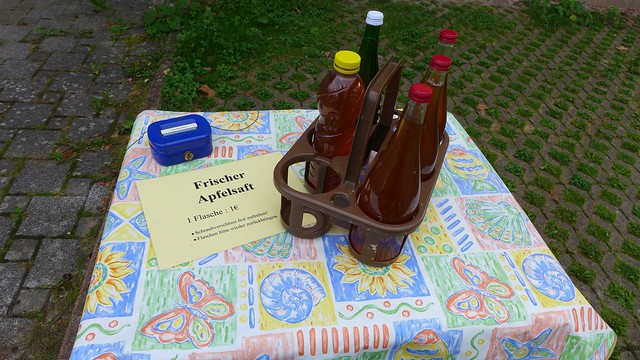
Some snapshots:


Inspired by this recipe I made red lentil soup. Turned out very well.

In addition to the curry and coriander, I added some ginger, chilis and some Nali sauce.

“Buvettes” are a big thing in Basel in summer. Their popularity is increasing.

Same as street food trucks.

Photos taken with a Moto G 2nd Gen smartphone. The best camera is the one that is with you.
Via the #confluencecon hashtag, I found some good background articles (thank you @ruthburr, @danlovejoy for tweeting).
You are NOT the user. http://t.co/bMlp1uwJqU #ConfluenceCon #UX #Marketing
— Dan Lovejoy (@danlovejoy) September 10, 2015
Take the time to understand your user. It will decrease the risk of creating an an unfavorable experience and give you an opportunity to turn them into your greatest advocate.
Guerrilla Research Tactics and Tools http://t.co/IGIsa3bC92
— âœ___CollectThisTweet (@nchenga) September 10, 2015
A reminder of research tools that I can use to learn more about the people that will use a website or app is provided in this article.
Guerrilla Research Tactics and Tools http://t.co/IGIsa3bC92
— âœ___CollectThisTweet (@nchenga) September 10, 2015
Above all else, there is no excuse for designing based off assumptions””in the immortal words of Jakob Nielsen: “Leaving the user out is not an option.”
Some new marketing tools mentioned in this slide deck by @ipullrank and a call to understand marketing technology:
Some new tools mentioned in the slides above:
Why No One Pays Attention to Your Marketing – Whiteboard Friday
"if you don't test, you'll never know" http://t.co/9uk0hhiSaT
— âœ___CollectThisTweet (@nchenga) August 16, 2015
I read this article on writing:
The Guide To Strategic Writing.
The main idea, as proposed in the article, is to research and find a proven idea. Then, write an article that improves on this idea.
Make sure the problem is real and your readers can relate to it
The article provides a good overview what content marketers will suggest and recommend in 2015.
The challenge that I see is trying to implement this in a small or medium sized business. You’ll need access to subject matter experts and time for research. Both are scarce.
Good times to be a writer.
I just deleted over 20 WordPress themes that had accumulated in my wp-content folder. Feeling de-cluttered. I’ve kept Syntax and Underline.
I’ve also been unlinking tonnes of broken links.
Next, I need to figure out why comments are not getting thru.
BTW, there’s a WordPress conf in Zurigo on 19 September.
I’ve been using WordPress since 2004. 11 years. It’s served me well.
Is it slow? Is it bloated? Maybe, but you can always work on improving that.
Via T3N, I found this article on the changing web.
Not sure if we can stop this development, but at least we can raise awareness, and point hyperlinks back to content that we like and cherish.
One of my favourite jokes is to walk into the office and complain about helmet hair. I keep saying that I’ll write a confessional book how bicycle helmets ruined my hairdo and life.
I found some stats that show helmet hair is an issue for some bicycle commuters:
I enjoy my bicycle commute too much to worry about my hair.
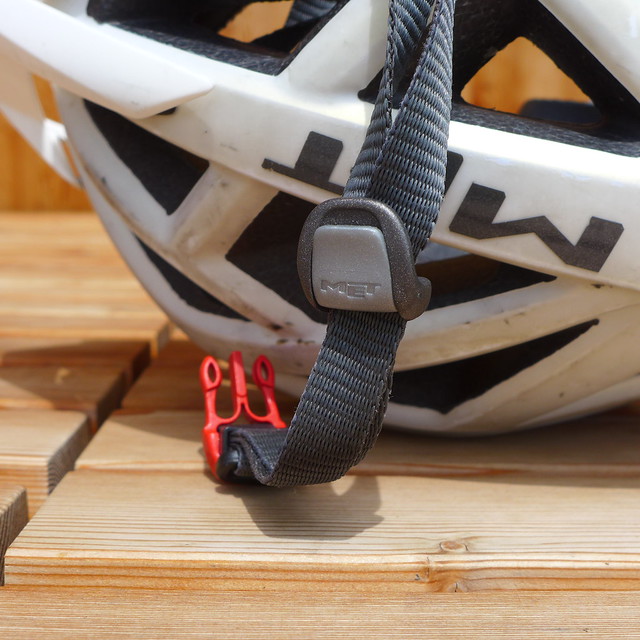
The reasons to wear a bicycle helmet outweigh the disadvantages by far:
Complimentary link:
I found a link on the history of bicycle helmets. And wearing a helmet is quite a recent development.
How helmets have changed over the past 30 years of the #TDF: http://t.co/6xVuQFCEqz pic.twitter.com/bxf5jvRiU8
— Bicycling Magazine (@BicyclingMag) July 26, 2015

I read this Forbes article on email subscription growth:
5 Email Growth Hacks From Someone Who Amassed A List of 750,000
"I’m a do-er. I do and learn." http://t.co/xWVDiIc6Pp
— âœ___CollectThisTweet (@nchenga) July 26, 2015
Two sites that I read regularly – Moz and Hubspot – analyzed and wrote about their own blog post frequency.
Quality vs. Quantity: A 6-Month Analysis of the Age-Old Blogging Debate
Raising the Bar: A Publishing Volume Experiment on the Moz Blog
I am stunned. Flabbergasted.
How will small and medium-sized enterprises thrive in such a content marketing world?
High quality and high frequency.
My prediction has always been that we will return to media empires with gatekeepers guarding the entrances.
Citizen journalists and bloggers will only get a voice when the gatekeepers choose to let them.
Some snapshots from my Lake Sempach bicycle tour on Sunday:
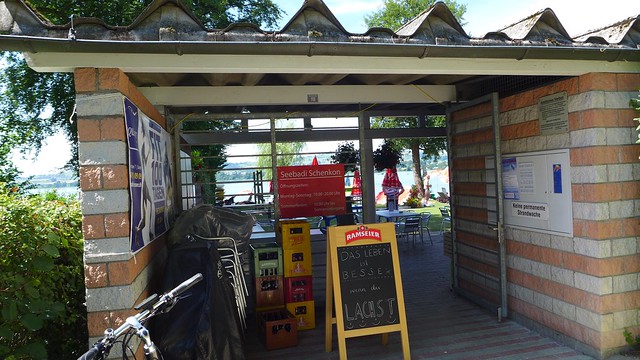





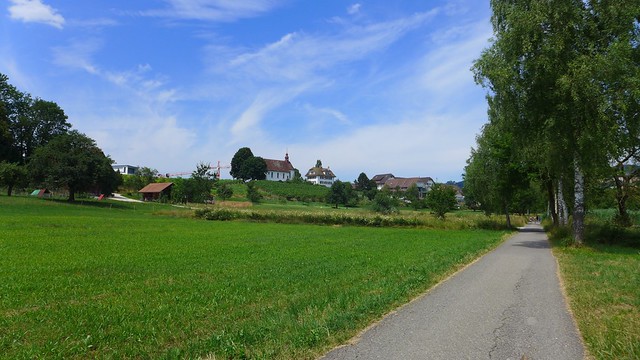

The tour is about 20 kilometers. If you have an all-terrain bicycle, try to follow the path closest to the lake. That’s more enjoyable than the busy road.
I managed to miss the turn-off to Sursee SBB train station. And so I saw Schenkon twice.
Category: easy
Length: 20 km
A couple of months ago, I went thru an SEO audit. I wanted to write a blog post to reflect on what I learned. This is my feeble attempt to collect my thoughts and jot down some notes. Where available, I’ve tried to list my source links.

What is an SEO audit? In an audit, your website is analyzed and checked (often by an external SEO specialist) to be sure that it complies with SEO best practises.

12 items to consider:
GWT is the place to find these. Same for missing title tags. Or meta descriptions that are too short. Or the index status, which shows you how many pages are indexed.
rel="alternate" hreflang=x on all web pages.
What will an SEO audit look like in 10 years? That is an intriguing question. I have no idea which way SEO will go. My guess is as good as yours. I do know that SEO is getting quite complex. And may even be replaced by *something* entirely new. If you are a website manager, my advice is to dig in and ask lots of questions.
Look at all aspects. Take a holistic approach. Try to form a cross-functional team (designer, ux researcher, web developer, SEO expert, content writer).
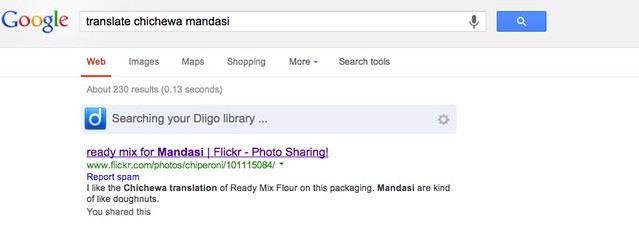
If you do search on Google, remember the search engine result on page 1 is not necessarily the best content, but the best optimized content. Use Google search operators to get you off the beaten track. And there are alternatives like DuckDuckGo and Wolfram Alpha, which we should support more to avoid monopoly and manipulation.
Related links
GWT resources:
http://www.lunametrics.com/blog/2014/05/21/how-to-use-google-webmaster-tools-for-seo/
On-page factors:
https://moz.com/learn/seo/on-page-factors
Duplicate content:
http://www.hobo-web.co.uk/duplicate-content-problems/
https://support.google.com/webmasters/answer/66359?hl=en
How to carry out a content audit:
https://moz.com/blog/content-audit-tutorial
Technical Site Audit Checklist: 2015 Edition:
https://moz.com/blog/technical-site-audit-for-2015
Disclaimer:
All mistakes are my own. Please let me know if I got something really wrong. I’m here to learn. These notes help me to reflect and learn.
Some notes and photos from Saturday’s UX camp in Zürich:
Adrian Sameli took us thru the process of building infographics. His tip on tools to use: Excel and Adobe Illustrator. He tried one or two infographic tools but didn’t like them much. In the discussion we looked at d3js.org.
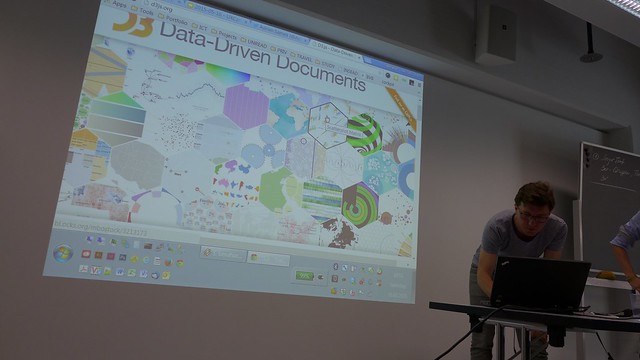
Next, I attended a session on atomic design. Design systems not pages.
Developers need to agree early on with designers on the semantics of the smallest, small and medium building blocks. These then are used in templates to build pages.
Background reading: Atomic design by Brad Frost.
Focus on identifying modules, semantics and adding markup first.
— âœ___CollectThisTweet (@nchenga) May 16, 2015
The discussion after the presentation got straight to the daily challenges. Questions like
Next, I listened to Simone Reichlin talk about the RITE method vs traditional user tests.
About the RITE method http://t.co/MzHAlYCRsI
— âœ___CollectThisTweet (@nchenga) May 16, 2015
Main idea: Often you see some obvious problems in your UX design after your first or second test person. Instead of going thru the whole test with the remaining test participants, change the prototype with your improvement between tests. And then continue testing your changed prototype.
Main requirement: Designer needs to watch the user test. This shortens discussion time afterwards.
Tools used: Sketch and inVision.
Don’t change too much. Follow Medlock’s classification.
Want to try RITE? Start with the traditional method first. Only use RITE after you have gained some experience in carrying out user tests.
Prio 1 obvious cause, quick solution, implement the fix and test with the next participant.
— âœ___CollectThisTweet (@nchenga) May 16, 2015
Next:
A very good session by Vincent van der Lubbe on creating space in conversations. And we even got a reference sheet to take home. The hard part is putting this into practise.
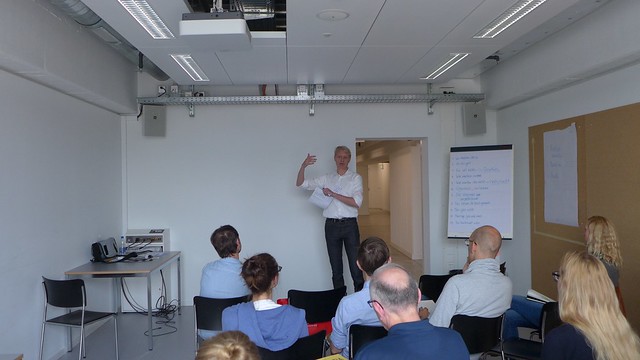
Fidel Thomet presented his B.A. project, Flaneur.io. It’s a Chrome extension to capture digital findings in form of text fragments gathered while browsing the web.
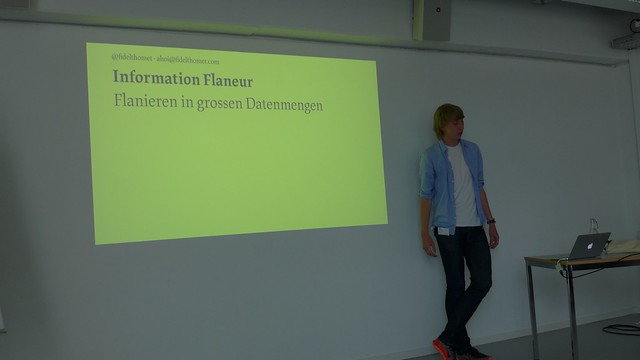
We briefly looked at Marian Dörk’s PivotPaths. This podcast by datastori.es was recommended.
Unknown, useless fact about me:
Once upon a time, I had to write a uni term paper on Walter Benjamin and Paris in the 19th Century.
My snapshots are on Flickr.
Disclaimer:
All mistakes are my own. Please let me know if I got something really wrong. I’m here to learn. These notes help me to reflect and learn.
I found it. It’s at a pedestrian light near Basel SBB.
A fun street art sticker I saw this past week.
I like
It’s called Radcliffe by Anders Noren.
An orange vespa crossed my path this week.
Yesterday morning a cyclist decided to cycle thru one of the roundabouts the wrong way round. During early morning traffic to work. If you’re thinking probably a bicycle courier: This cyclist was a woman in her 30s or 40s.
Nothing happened. No accident followed.
But it still had me shaking my head. Road traffic rules are there for our own safety. A lot can happen at 30km/h. We’re vulnerable. More than we think.
There are enough occasions when we make unintended mistakes. No need to wilfully ignore traffic rules.
(Sorry. Turning into an activist.)
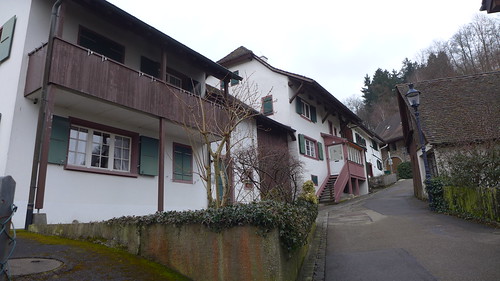
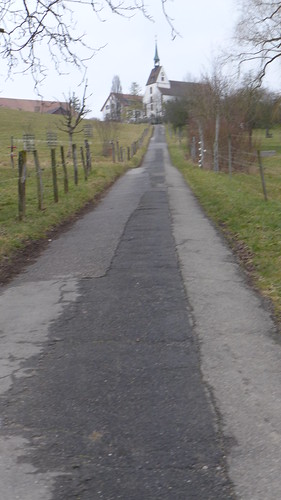
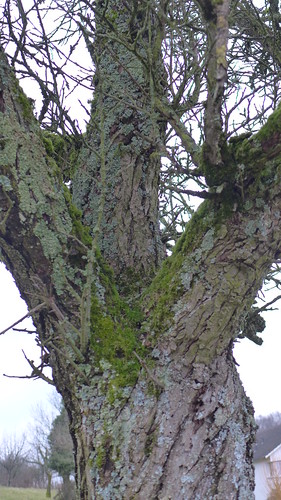
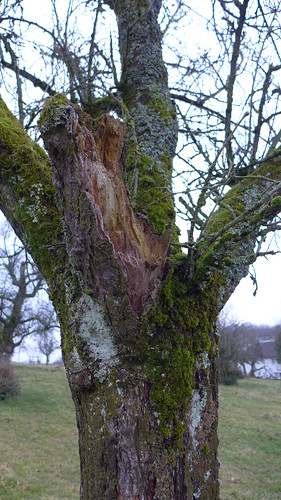
I hope you like some of the snaps I took today:



For future reference:
Questions to consider before you delve into the details
"What does our organization create that helps solve searchers' questions or problems? " http://t.co/tPTJq5Z6FB
— âœ___CollectThisTweet (@nchenga) February 4, 2015